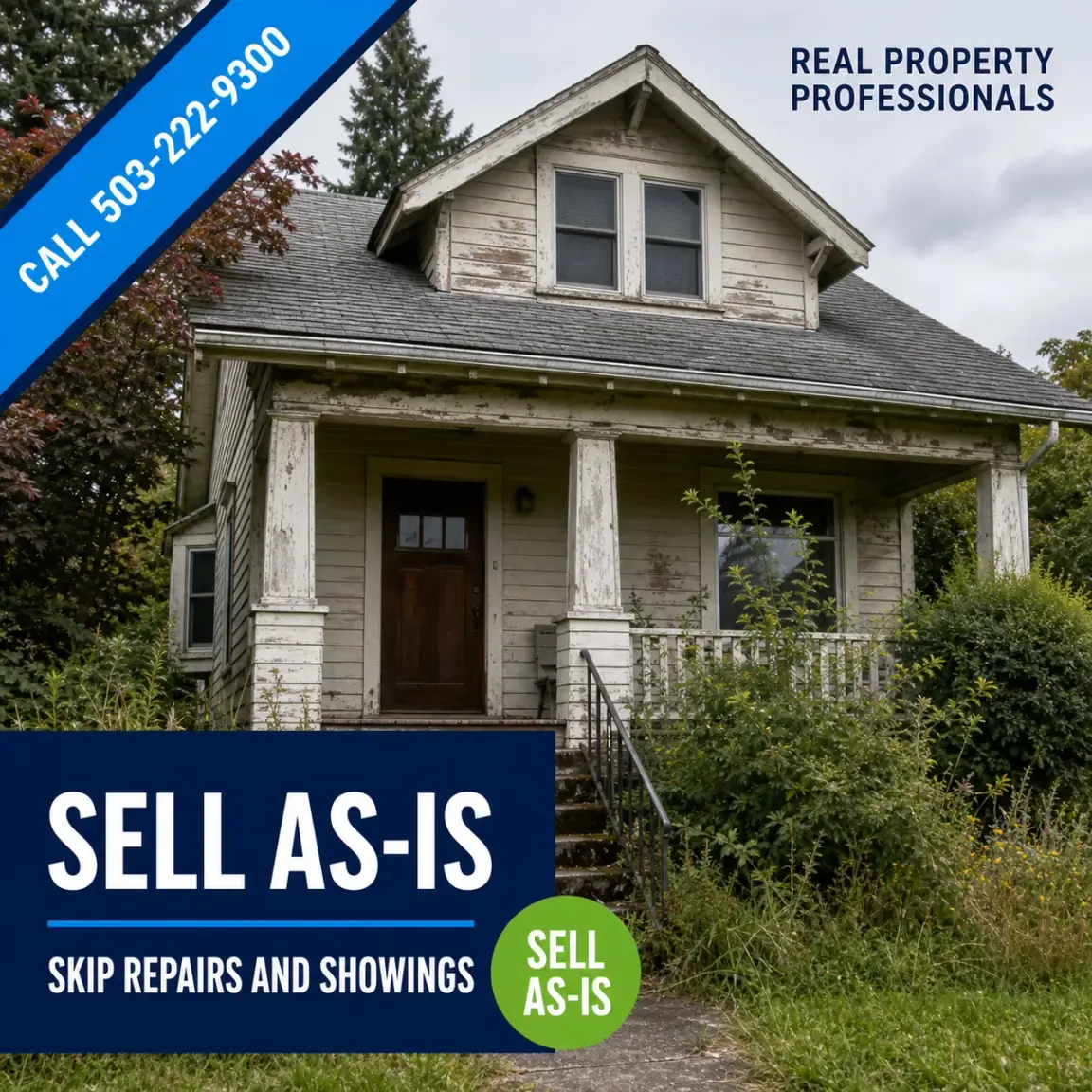


Sell Your Oregon House As-Is
Oregon homeowners sell for many different reasons, but most share the same goal: a clear process that fits their property, budget, and timeline. Understanding the available choices before committing can prevent avoidable costs and last-minute surprises.
An as-is sale allows a homeowner to offer a property in its current condition instead of completing every cosmetic update or major repair first. That can remove a large financial and logistical burden.
Why This Matters for Oregon Property Owners
This option may fit homes with dated interiors, deferred maintenance, unwanted belongings, or repairs the owner cannot reasonably manage. Local market conditions matter, but so do the condition of the house, the seller’s schedule, and the costs that continue until closing.
Oregon properties also face practical issues such as seasonal rain, moisture, aging roofs, drainage, and deferred exterior maintenance. These details can affect repair plans, inspections, insurance, and buyer expectations. Owners in Portland, Beaverton, Hillsboro, and surrounding communities should evaluate the actual house instead of relying only on broad market headlines.
Start With the Complete Financial Picture
Compare options using expected net proceeds. A sale price alone does not show commissions, repairs, cleaning, concessions, financing delays, taxes, insurance, utilities, and other holding costs. Writing these items down makes the tradeoffs easier to see.
- Document the property’s current condition and any known issues.
- Compare the likely net proceeds of repairing and listing with selling as-is.
- Review the offer, expected closing costs, and timeline before deciding.
Questions to Ask Before You Choose
Ask how the property will be evaluated, what access is required, which costs you may pay, whether the agreement contains contingencies, and what could change the closing date or final amount. Request important terms in writing and review them before signing.
As-is does not erase disclosure responsibilities. Be candid about known material defects and ask questions about the paperwork.
Common Mistakes to Avoid
- Comparing only headline prices instead of estimated net proceeds.
- Spending on improvements before confirming that buyers will value them.
- Ignoring monthly holding costs while waiting for the perfect time to sell.
- Accepting vague verbal terms instead of reviewing a complete written agreement.
- Choosing a closing date without confirming title, payoff, or estate paperwork.
A careful comparison does not need to take weeks. Even a simple worksheet with price, costs, work required, contingencies, and timing can reveal which path best matches your priorities.
Traditional Listing or Direct As-Is Sale?
A traditional listing may reach a broad pool of buyers and may be appropriate for a market-ready home. It can also require preparation, showings, inspections, appraisal, buyer financing, and negotiation. A direct as-is sale may reduce those steps and provide more certainty, although the offer should reflect the buyer’s costs and risk. Neither route is automatically right for everyone.
A Practical Seller Checklist
- Gather mortgage, title, tax, insurance, and repair information.
- Write down your ideal and latest acceptable closing dates.
- Identify belongings or occupancy issues that must be addressed.
- Ask each buyer or agent for a realistic estimate of costs and timing.
- Read agreements carefully and get independent advice when appropriate.
How Real Property Professionals Can Help
Real Property Professionals buys houses in Oregon at a market-based offer, as-is. Homeowners can avoid repairs and public showings and choose a fast, hassle-free closing schedule that works for their situation. We explain the process clearly so you can compare it with your other selling options.
If you are considering selling an Oregon property, call Real Property Professionals at 503-222-9300 to discuss the house and request an offer. There is no substitute for reviewing your individual circumstances, and you should consult legal, tax, or real estate professionals when appropriate.